- When is the best time to visit Big Sky?
- Mid-December through Presidents' Week is peak ski season — biggest snow base, full lift access, and the 5,850-acre footprint at full capacity. Locals favor mid-January through early February (the cold-weather quality-snow window) and mid-March through early April (Spring Skiing Capital weeks, when the Gallatin runs strong and the Lone Peak Tram still runs to a snowy summit). Summer (mid-June through Labor Day) is the Yellowstone-and-bike-park window — Beehive Basin wildflowers peak in late July, the Gallatin runs cold-and-clear for fishing, and the bike park stays open daily. October through mid-December and April–May are mud seasons — many restaurants close.
- What's the closest airport to Big Sky?
- Bozeman Yellowstone International (BZN) is the only practical option at 50 miles north — about a 60-minute drive on US-191 down Gallatin Canyon. BZN has nonstop service from Atlanta, Dallas, Denver, Minneapolis, San Francisco, Seattle, Los Angeles, Newark, JFK, Chicago O'Hare, Houston, Salt Lake, and Phoenix; it's been Montana's busiest airport since 2019. Karst Stage and Skyline Coach run direct shuttles from BZN to Big Sky for $80 one-way; rental cars run consistently 30% above the national average — book 2 months out for ski-week rates.
- How long should I stay at Big Sky?
- Most Big Sky condos run on a Saturday-to-Saturday cycle in ski season, with 3-night minimums on weekends and 5–7 night minimums during holiday weeks. A 4-night minimum is the right pattern for non-holiday weeks; full 7-night stays are common for Christmas, Presidents' Week, and Spring Break. Summer Yellowstone trips usually pair a 3-night Big Sky stay with 2–3 nights in West Yellowstone or inside the park. Book by mid-September for Christmas; by November for Presidents' Week.
- Do I need a car at Big Sky?
- Yes — Big Sky is spread across nine miles of US-191 and Lone Mountain Trail, and almost everything outside the Mountain Village pedestrian zone (Town Center, Lone Mountain Ranch, the Gallatin River fishing put-ins, every Yellowstone day trip) needs a vehicle. The free Skyline Bus runs Mountain Village to Town Center every 30 minutes during ski season and high summer, so a car-free week is technically possible if you stay in Mountain Village and don't day-trip — but rare.
- What's the weather like at Big Sky?
- Big Sky has a high-elevation continental climate. Winter (December–March) averages 15–35°F days, -5–15°F nights, and 400+ inches of average snowfall on Lone Mountain. Summer (June–August) runs 70–82°F days and 40–55°F nights, with afternoon thunderstorms over Lone Peak that usually clear by sunset. Spring (April–May) and fall (September–October) are the unpredictable shoulders — pack layers and waterproof shells. Smoke from Western wildfires can affect August air quality; check Montana DEQ before peak-summer trips.
- Is Big Sky good for families?
- Yes — the resort is engineered around the Mountain Mall ski school, the Andesite chair for beginner-and-intermediate progression, and the kid-friendly bike-park flow lines in summer. The Lone Peak Tram is rated for all ages but only experts ski the Big Couloir — most family weeks ride the tram up for the photo and ski back down via the Bowl. Yellowstone day trips work well from age 5+; under-5 kids do better with the Ousel Falls and Town Center Westfork Park rotation. The Skyline Bus and the Mountain Village walkability make a multi-stroller week genuinely manageable.
- Where should I stay at Big Sky?
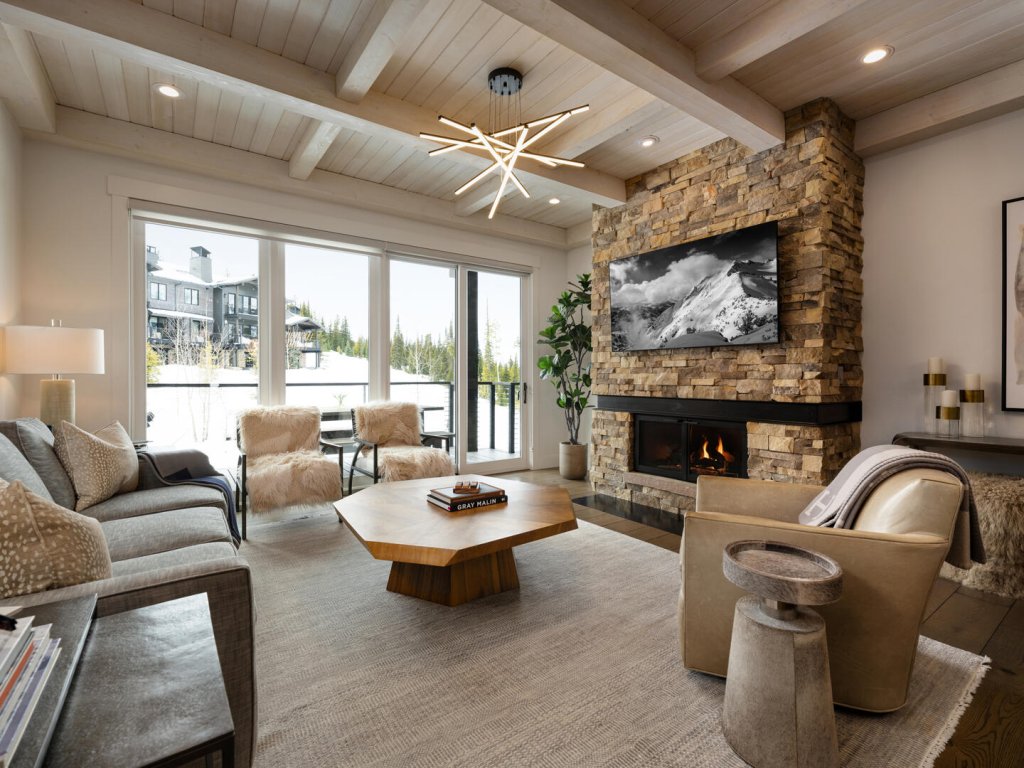
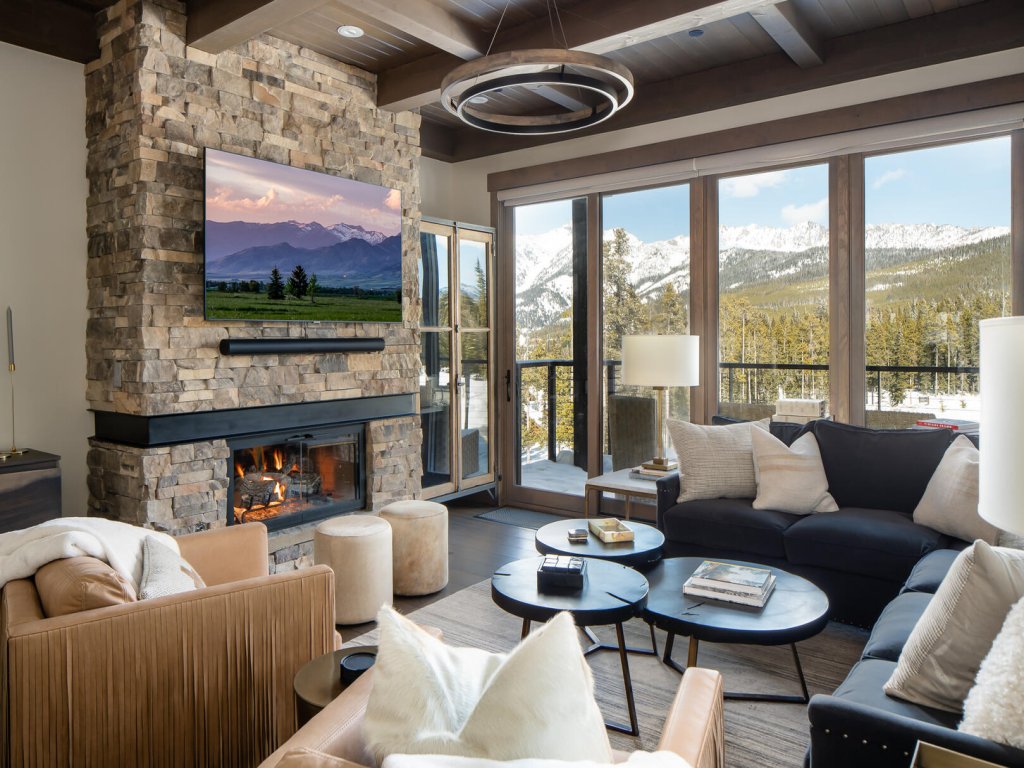
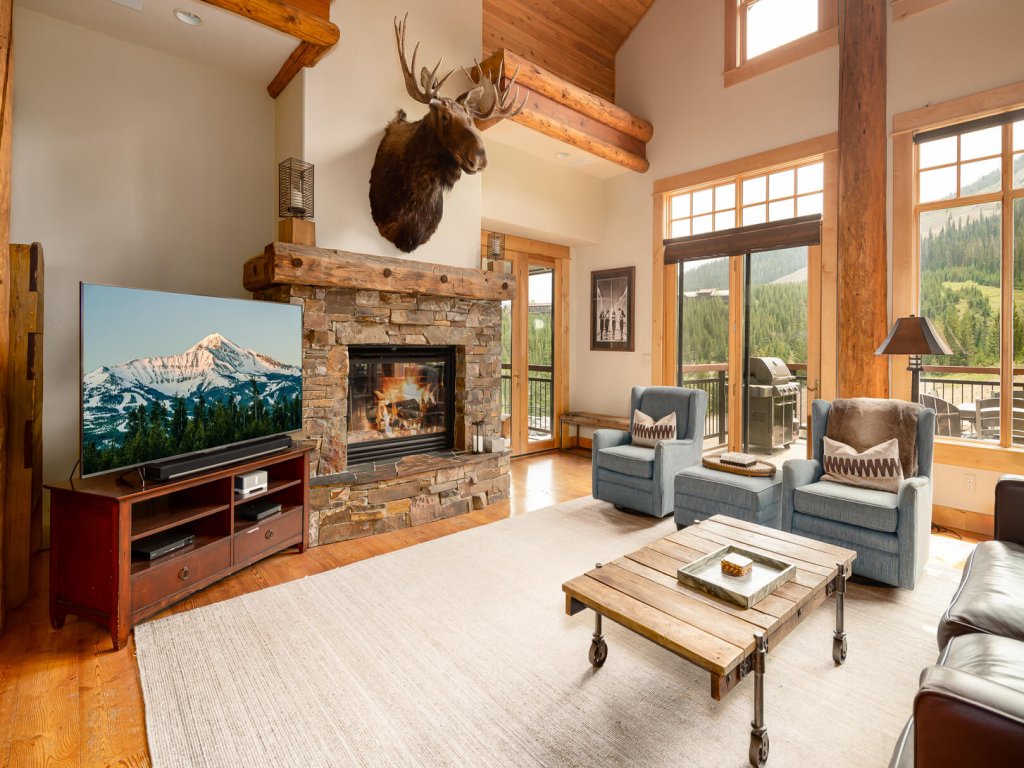
- Mountain Village ski-in/ski-out condos at Beaverhead, Lake, Hill, and Stillwater complexes are the closest to the Mountain Mall chair — best for ski-first weeks. Meadow Village townhomes at Aspen Groves and Skylight Place sit two miles below the resort and offer the cross-country and quiet-night option, with a 5-minute Skyline Bus ride to the lifts. Town Center condos are the family-and-grocery-walkability pick. Gallatin Canyon homes (320 Ranch, Big Sky Resort Boundary, Cinnamon Creek) sit south of Town Center on US-191 and trade slope-side for Yellowstone proximity. RedAwning's Big Sky inventory covers all four.
- How much does a Big Sky vacation rental cost?
- Off-season (May–early June, October–early December), 2-bedroom Mountain Village condos run $200–$400 a night with 2-night minimums. Shoulder ski (early December, January non-holiday) the same units run $400–$700. Peak winter holiday weeks (Christmas, Presidents', MLK), 2-bedroom ski-in/ski-out condos run $750–$1,400 a night and 4-bedroom slope-side homes run $1,500–$3,500. Summer Yellowstone-month bookings (July–August) run $300–$600 for 2-bedroom Town Center and Meadow units. Book by mid-September for Christmas; by November for Presidents' Week.
- Are pets allowed at Big Sky vacation rentals?
- A meaningful share of Big Sky rentals are pet-friendly — filter for "Pets OK" on RedAwning. Pet fees typically run $100–$200 per stay. Big Sky Resort doesn't permit dogs in the lifts or the base lodges, but the Lone Mountain Ranch Nordic trails and the Beehive Basin and Ousel Falls trails are leashed-dog-friendly year-round. Yellowstone National Park allows dogs only in developed areas (parking lots, paved roads); plan to leave the dog at the rental for park days.
- Is Big Sky better than Jackson Hole?
- They're different mountains for different trips. Big Sky has more skiable acres (5,850 vs Jackson Hole's 2,500), shorter lift lines (six skiers per acre vs twenty), and a quieter pedestrian Mountain Village. Jackson Hole has the harder-charging expert reputation (Corbet's Couloir, the Hobacks), the cowboy-town atmosphere of downtown Jackson, and the Tetons-and-Yellowstone double-park access from the same valley. Most Western-ski regulars do Big Sky for the volume-and-quiet and Jackson for the steep-and-cultural — and a Bozeman-Jackson combo trip pairs both inside one rental-car week.