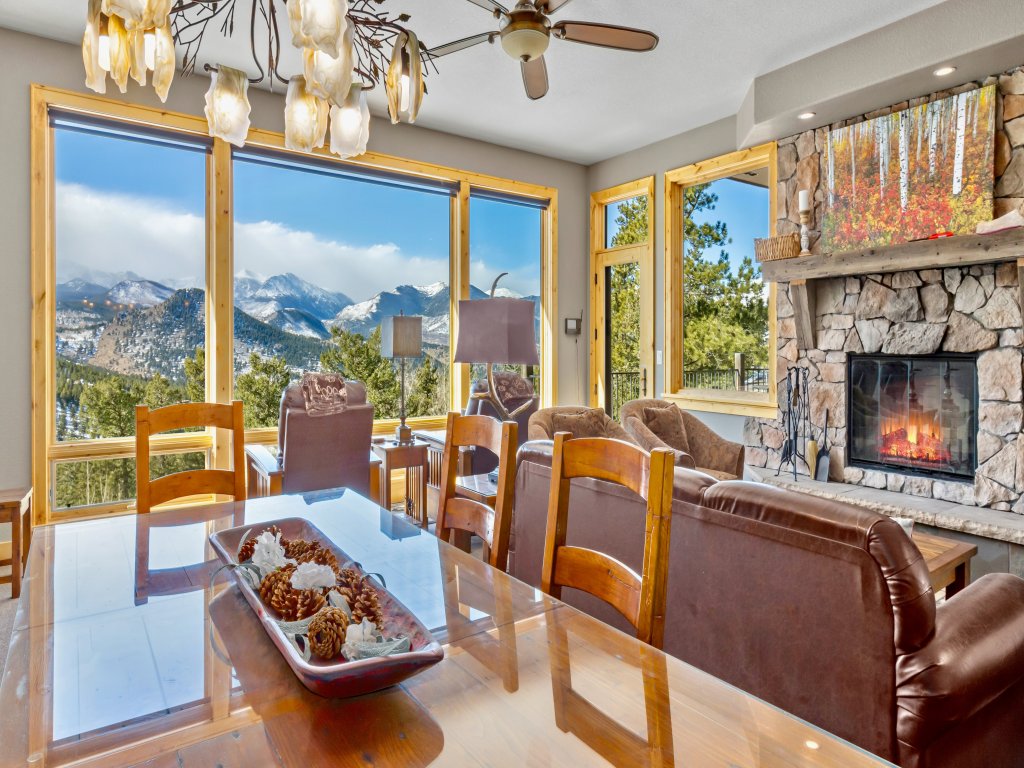
- When is the best time to visit Estes Park?
- June through August is peak summer — Trail Ridge Road open, Bear Lake hikes accessible, and the timed-entry-permit system in force park-wide (book 10 days ahead at Recreation.gov). Mid-September through mid-October is the elk-bugling season and the locals' favorite shoulder window — quieter park, fall aspens at Bear Lake, and Trail Ridge typically open through Columbus Day. Late November through mid-March is the quiet snowshoe-and-Stanley-ghost-tour winter; lifts at Eldora and the Stanley Whiskey Bar carry the off-season. Mid-April through May is mud season — closed Trail Ridge, muddy trails, and the lowest rates of the year.
- What's the closest airport to Estes Park?
- Denver International (DEN) at 80 miles is the practical option — a 90-minute drive north on I-25 to US-36 in Boulder, then west through Lyons up the Big Thompson Canyon. Estes Park Shuttle runs scheduled service from DEN for around $59 per person each way. There is no commercial airport closer; Loveland-Fort Collins (FNL) and Centennial (APA) are general-aviation only.
- Do I need a timed-entry permit for Rocky Mountain National Park?
- Yes, late May through mid-October. The park runs two permit zones: a park-wide permit (1 p.m.–6 p.m. window, available 9–11 a.m. and not sold day-of for 6/7 days) and a Bear Lake corridor permit (5 a.m.–6 p.m. window, the busiest zone). Both released on Recreation.gov in May for the full summer; the day-before next-day window opens at 7 p.m. Mountain. Your $30 entrance fee is separate. Vacation-week first-time visitors should plan permits two weeks ahead of arrival.
- How long should I stay at Estes Park?
- Most Estes Park rentals run on Saturday-to-Saturday weekly cycles in summer peak — plan a full seven nights for a Trail Ridge plus Long's-Peak-area hiking week. Off-season (April–May, October–November), most properties relax to 2-night minimums; long weekends pair well with a Devil's Backbone or Grand Lake day trip. Six-week-out booking is the right window for July–August; ten weeks for the elk-bugling September–October peak; six weeks for winter snowshoe-and-Stanley weeks.
- Do I need a car at Estes Park?
- Yes, for park access. The free Estes Park Shuttle runs three loop routes downtown in summer (Memorial Day through Labor Day) and the Park Service Hiker Shuttle runs from the Estes Park Visitor Center to the Bear Lake Park-and-Ride and the Beaver Meadows entrance. But most rentals are 10–15 minutes from the park gates by car, and Trail Ridge Road is the iconic Estes Park drive. A 4WD is not required (Trail Ridge is fully paved); rent any midsize from DEN.
- What's the weather like at Estes Park?
- Estes Park sits at 7,522 feet in a Front Range continental climate. Summer (June–August) runs 75–80°F days, 45°F nights, intense UV, and the daily 2 p.m. thunderstorm risk above timberline (clear summits before noon). Fall (September–October) is the most stable, dry weather of the year with 60s daytime and crisp 30s nights. Winter (December–March) averages 35–45°F days, 15°F nights, with the valley mostly snow-free between storms but the park interior fully snowed-in. Spring (April–May) is mud season — closed Trail Ridge, muddy trails, and rapidly changing weather.
- Will the altitude affect me?
- Possibly — Estes Park sits at 7,522 feet, Bear Lake at 9,475 feet, and Trail Ridge Road peaks at 12,183 feet (where 40% of sea-level visitors feel breathless). Sea-level guests typically feel mild altitude headaches in the first 24 hours. The standard playbook: arrive in Denver early, hydrate aggressively (one liter per thousand vertical feet), avoid heavy alcohol the first night, and ease into hiking on day one. The Lake Estes Trail and the Riverwalk are gentle first-day options; save Bear Lake and Trail Ridge for day two or three.
- Is Estes Park good for families?
- Yes — Estes Park is a family-engineered National Park gateway. The YMCA of the Rockies runs the country's most-developed family-camp programs, the Estes Park Aerial Tramway is a kid-favorite ride, the Lake Estes Trail and the Riverwalk are stroller-friendly, and the Stanley Hotel ghost tour skews adult but the campus is fully family-friendly. The biggest tradeoff is the timed-entry-permit complexity — book park access early and the rest of the week falls into place.
- How much does an Estes Park vacation rental cost?
- Off-season (mid-April through Memorial Day, mid-October through Thanksgiving), studio and 1-bedroom condos run $130–$220 a night with 2-night minimums. Summer (June–August) and elk season (mid-September through mid-October), 2-bedroom condos run $250–$425 and 3–4-bedroom Windcliff vacation homes $500–$900. Christmas–New Year (peak winter) and the third week of June (Stanley Film Festival) carry the highest rates: 3-bedroom homes $700–$1,200, with 5-night minimums. Book by April for July–August; six weeks out for elk season.
- Are pets allowed at Estes Park vacation rentals?
- Many Estes Park rentals are pet-friendly — filter for "Pets OK" on RedAwning. Pet fees typically run $59 per night per pet on the Windcliff vacation-home portfolio. Dogs are not allowed on park trails inside Rocky Mountain National Park (only on roads, in pull-outs, and at established campgrounds), but the Lake Estes Trail, the Riverwalk, and the Roosevelt National Forest trails on Lumpy Ridge and at Devil's Backbone (Loveland) are leash-friendly year-round.