
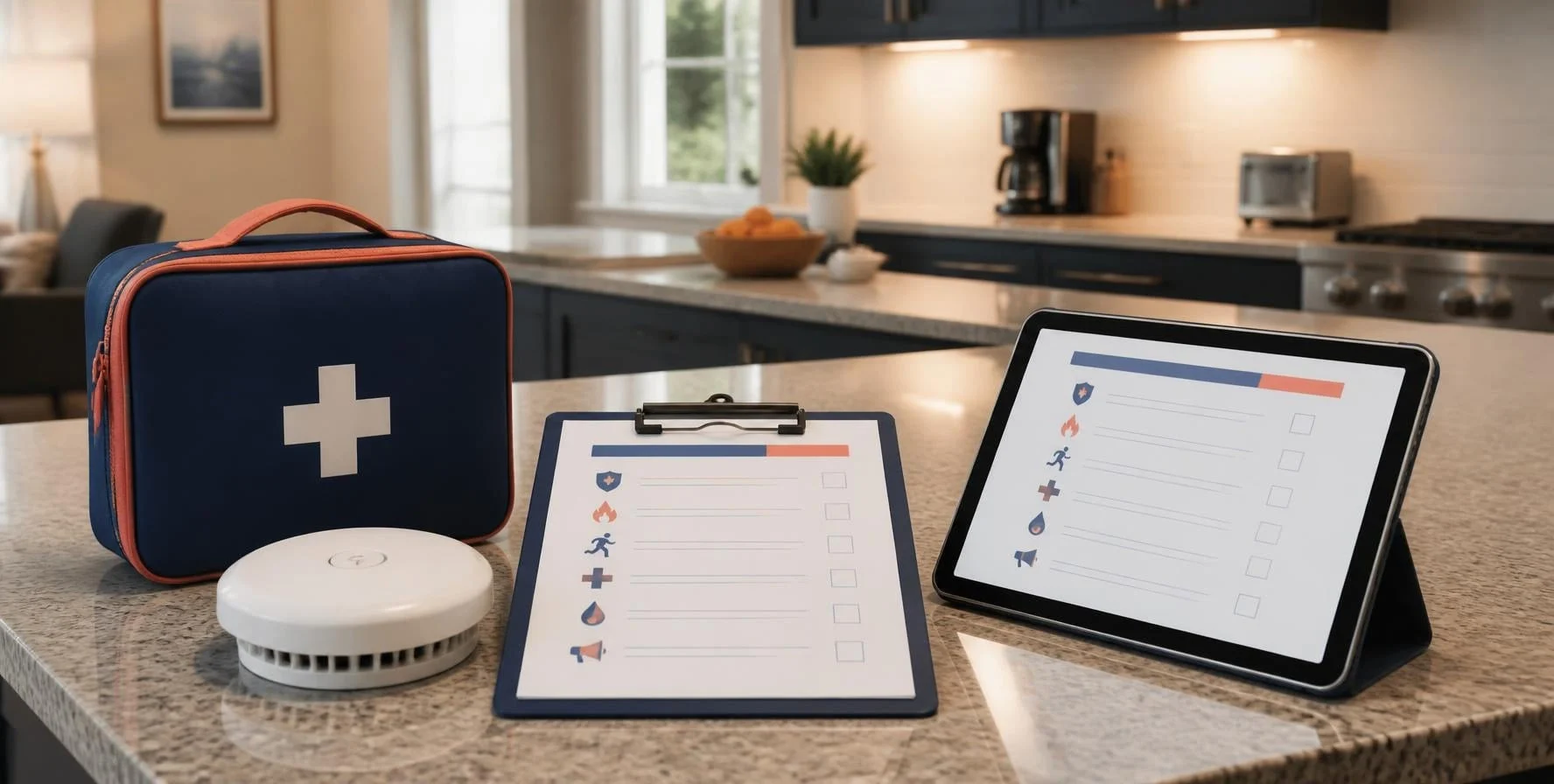
Every property manager with a real portfolio will eventually take the call: a guest fell on the stairs, a smoke alarm is sounding at 2 a.m., a carbon monoxide detector has gone off, or a group has turned a rental into something the owner never approved. What happens in the next hour is rarely decided by the person on the phone. It is decided by whether a vacation rental incident response plan existed before the call came in. Without one, staff improvise, records are thin, owners hear three different versions of events, and a manageable emergency becomes a liability problem.
The tension is that incidents are rare enough that no one practices for them and serious enough that mistakes are expensive. This guide covers how to define severity tiers, what the first 60 minutes should look like, how to build an on-call chain of command, what to document and preserve, how to notify insurers, owners and booking platforms, how to communicate without speculating or admitting fault, and how to review and drill the plan. It is operational guidance, not legal advice; the note below explains who should review your final version.
What is a vacation rental incident response plan?
A vacation rental incident response plan is a written procedure that tells every person on your team what to do, in what order, and who to notify when a guest or property emergency occurs. It covers guest injuries and medical emergencies, property emergencies such as fire, flooding, and gas or carbon monoxide alarms, safety threats, and serious guest conduct problems such as unauthorized parties or threatening behavior.
A plan differs from a general emergency manual in one respect: it assigns decisions to roles, not individuals, so it works at 3 a.m. on a holiday weekend when your usual lead is unreachable. It should be short enough to use under stress, which usually means one page of decision logic per incident type plus a checklist, with longer reference material behind it. Portfolio-wide events such as hurricanes, wildfires, and regional outages belong in a separate disaster plan; RedAwning's guide to disaster and emergency planning for vacation rental portfolios covers that scope. This plan handles the single-property, single-guest events that arrive without warning.
Important: this article is general operational guidance, not legal advice. Reporting duties, liability, and privacy obligations vary by state and by contract. Have your attorney and your insurance broker or carrier review your plan before you adopt it.
How should you define incident severity tiers?
Severity tiers sort incidents by risk to life and property so that response speed, staffing, and notification scale with the situation, not with who happens to answer the phone. Three or four tiers are enough; more than that and staff will not remember them. The table below is a starting framework to adapt, with response targets expressed as principles because the right numbers depend on your staffing and markets.
| Tier | Example | Response target | Who is notified |
|---|---|---|---|
| Tier 1: Life safety | Unresponsive or seriously injured guest, active fire, carbon monoxide alarm with symptoms, credible threat of violence | Immediate: emergency services first, manager engaged the moment the call is received | Emergency services, on-call lead, senior operations leader; owner and insurer as soon as life safety is stable |
| Tier 2: Urgent property or safety | Active leak or flooding, gas smell, alarm with no symptoms, minor injury needing treatment, heavy damage in progress | Fast: acknowledged and acted on ahead of routine work, with a person or vendor dispatched or on the phone | On-call lead, vendor, owner the same day, insurer if loss is likely |
| Tier 3: Serious conduct or security | Unauthorized party, repeated noise complaints, suspected illegal activity, property entered by an unknown person | Prompt: guest contacted and the situation contained before it escalates | On-call lead, owner, platform where relevant; local authorities if needed |
When in doubt, classify up, and let only the incident lead lower a tier. Log the reason for any change.
What should happen in the first 60 minutes of a guest emergency?
In the first hour, protect life first, contact emergency services when there is any doubt, assign one incident lead, and start a written timeline before you do anything else. Property protection, owner notification, and guest relations all follow life safety, and none of them is worth delaying a 911 call.
- Ask if anyone is in danger. The first question to any guest on the phone is whether everyone is safe and whether emergency services are needed. If there is any doubt, tell the guest to call 911 or the local emergency number, or place the call yourself.
- Name the incident lead. One person owns the incident until formally handed off. Everyone else supports.
- Start the timeline. Record the time of the first report, who reported it, and every action after. Use clock times, not memory.
- Make the scene safe if you can do so safely. Guests move away from a hazard, remote shutoffs are used where they exist, and staff do not enter a dangerous environment. Never ask a guest or a cleaner to take a risk to protect property.
- Dispatch support. Send a manager, technician, or vendor as the tier requires, and confirm arrival.
- Notify the chain of command. Page the on-call lead and, for Tier 1 and Tier 2, senior operations, following the escalation order below.
- Preserve evidence before cleanup. Photograph and record conditions before anything is moved, repaired, or cleaned, unless doing so would delay safety work.
Who is in charge? Building an on-call chain of command
A chain of command names, for every shift, a first responder, an incident lead, a backup, and an executive escalation contact, and states exactly when each is called. The point is that nobody has to decide who to call while an emergency is unfolding.
- First responder. Usually guest support or the on-call coordinator. Takes the call, applies the life-safety questions, and classifies the tier.
- Incident lead. A trained manager who owns decisions, coordinates vendors and communication, and keeps the timeline. Holds authority to spend up to a set limit without approval.
Write down spending authority and vendor contacts in advance so nobody waits for permission while water spreads. Name an executive contact for Tier 1 events and any serious injury, and decide who speaks to guests, owners, and insurers so the facts stay consistent. The mechanics of staffing and routing overnight calls are covered in RedAwning's guide to building an after-hours escalation policy; this plan should plug into that structure, not duplicate it.
What should you document, and how do you preserve evidence?
Good incident documentation is a factual, time-stamped record of what was reported, what was observed, who did what, and what was said, created as events happen and kept unaltered. Incident documentation is also the evidence your insurer, owner, platform, and counsel will ask for, so the standard should be consistent across every incident.
A minimum record for every Tier 1 to Tier 3 incident:
- Timeline. First report time, reporter, each action with clock time and the name of the person who took it, arrival times, and resolution.
- Facts only. Write what was seen and heard, not conclusions. Write "water on the kitchen floor near the dishwasher, approximately 20 feet from the door" rather than "the dishwasher flooded the house."
- Photos and video. Wide, mid, and close shots taken before cleanup, including the surrounding area, alarm displays, and relevant stair, railing, or lighting conditions. Keep time-stamped originals.
- Messages and call notes. Preserve every guest message thread, call log, and voicemail. Do not edit or delete anything, and note any calls that were not recorded.
- Witness details. Names and contact details of guests, staff, and vendors who saw the event, recorded with their consent and used only for the incident.
- Device and system data. Alarm logs, smart lock entry history, and sensor data. Export before device retention periods expire.
Evidence preservation means suspending routine deletion and cleanup for anything connected to the event. Set a legal-hold habit: when a Tier 1 or serious Tier 2 incident occurs, retention settings for messages, logs, and footage are paused for that property and date range until counsel says otherwise. Store everything in one restricted incident folder.
Who do you notify, and when?
Notify emergency services first, then your internal chain, then insurers, owners, and platforms, each according to the timing and format in their own policy or agreement. The order matters, and so does the fact that each party has its own process.
- Insurers. Policies often set notice requirements, and late notice can complicate a claim. Report serious incidents promptly, even if you are unsure whether a claim will follow, and follow the carrier's process for who reports and what they need. Your broker can tell you which policies respond to which incidents. RedAwning's guide to vacation rental insurance for property managers covers coverage types and common gaps. Operational guidance only; confirm the notice terms in your own policies.
- Owners. Your management agreement should say what constitutes a notifiable event and how quickly. Call the owner for anything involving injury, major damage, emergency services, or possible claims, and follow with a written summary of the facts.
- Booking platforms. Many platforms have their own safety, incident, and claims processes, and some have dedicated support lines for serious events. Check each platform's help center for current reporting steps and deadlines, and record when and how you reported. If the incident may lead to a damage or liability claim, the documentation standards of the platform matter; RedAwning's guide to Airbnb AirCover claims explains how one platform's process works in practice and why deadlines and evidence matter.
How should you communicate with guests and owners during an incident?
Communicate facts, next steps, and empathy; do not speculate about cause, assign blame, promise outcomes, or share another party's private information. The goal is to be humane and clear without creating statements that you may not be able to support.
Principles for guest communication:
- Lead with care. "We are sorry this happened. Are you and everyone with you safe?" is appropriate. Sympathy is not an admission of fault, but avoid phrases like "this was our mistake" or "we should have fixed that" until counsel advises.
- State what you know and what you will do. "A technician is on the way and will arrive by about 9:30" is useful. "This has never happened before" is a claim you may not be able to prove.
- Do not speculate. Do not offer theories about what caused a fall, a fire, or an alarm. Say the cause is being reviewed.
- Protect privacy. Do not share one guest's name, contact information, health details, or booking data with another guest, a neighbor, or the media. Share personal data with insurers, platforms, and authorities only as needed and through proper channels.
For owners, send a concise written summary as soon as facts are confirmed: what happened, current status, actions taken, safety steps, whether emergency services or insurers were contacted, and what happens next. Update on a set schedule during a live incident, even if the update is "no change." Owners tolerate bad news; they do not tolerate silence or surprises, and they should hear from you before they hear from a guest, a neighbor, or a review.
Serious guest conduct incidents. Conduct incidents such as unauthorized parties, threats, or illegal activity share the same structure but add a risk to staff. Do not send staff to confront a hostile group alone. Contact the guest first, remind them of the house rules and the rental agreement, and involve local authorities when there is a safety risk. Follow platform procedures for removing a guest when the situation warrants it, and document every message. RedAwning's guide to party and noise prevention covers the prevention side of these incidents.
How do you review incidents and drill the plan?
Every Tier 1 to Tier 3 incident should end with a blameless post-incident review within a defined window that produces corrective actions with owners and due dates. A blameless review asks what in the system allowed the event or slowed the response, not who to blame.
A post-incident review should cover:
- Timeline reconstruction. Compare what happened with what the plan says should have happened.
- Root cause. Physical causes such as a missing handrail, an expired detector, or a poor lighting condition, and process causes such as a missed inspection or a delayed page.
- Corrective actions. Specific tasks with owners and deadlines, tracked to closure, across the affected property and any similar ones in the portfolio.
Physical corrections should be portfolio-wide. If a detector failed at one property, audit detectors across the fleet; RedAwning's guide to vacation rental fire safety compliance covers the equipment and inspection side, including alarms.
Training and drills keep the plan usable. New on-call staff should read the plan and shadow a lead before taking a shift. Run tabletop exercises at least twice a year, presenting a scenario such as a guest with a serious fall at midnight or a carbon monoxide alarm during a snowstorm, and have the team walk through the checklist aloud. Time how long it takes to reach the lead, note where the plan was unclear, and fix it.
Frequently asked questions about a vacation rental incident response plan
Should staff call emergency services or the manager first?
Emergency services first whenever there is a risk to life or a serious injury. Your team can notify the on-call lead immediately afterward, but no one should delay a 911 call to get approval.
Should we apologize to a guest who was injured?
Expressing sympathy and concern is appropriate and humane. Avoid statements that assign fault or speculate about cause, and have counsel or your insurer guide any further communication on serious incidents.
How soon should we notify our insurance carrier?
Policies typically include notice conditions, so report serious incidents promptly and follow the carrier's process. If you are unsure whether an event is reportable, ask your broker early. Confirm the exact terms in your own policies.
Do we have to tell the booking platform about every incident?
Not necessarily. Platform processes differ, and requirements change, so check the current help center and partner terms for each channel you use. Serious injuries and safety events, and anything that may lead to a claim, are the ones to report through the proper channel and record.
What should we keep after an incident is resolved?
Keep the timeline, photos and video, message threads, call notes, device logs, witness details, inspection and maintenance history, and any failed equipment, and pause routine deletion for that period. Ask counsel how long to retain the file.
How often should we test the plan?
Run at least two tabletop exercises a year, verify contact lists and on-call acknowledgment each quarter, and review the plan after every serious incident. New staff should train on it before their first on-call shift.
A vacation rental incident response plan turns a chaotic hour into a sequence: life safety, one incident lead, a written timeline, preserved evidence, factual communication, and a review that changes something. Build the tiers, name the roles, drill the checklist, and have your counsel and insurer review the result. RedAwning distributes 20,000+ properties across 50+ booking channels, so if you want to see how that works for your portfolio, see how RedAwning works for property managers and schedule a demo with our team.

Airbnb Management
Get your Airbnb managed by the best in the industry.
Schedule a call
- Starting at 10%
- Available in all local markets
- 4.8+ guest rating









